
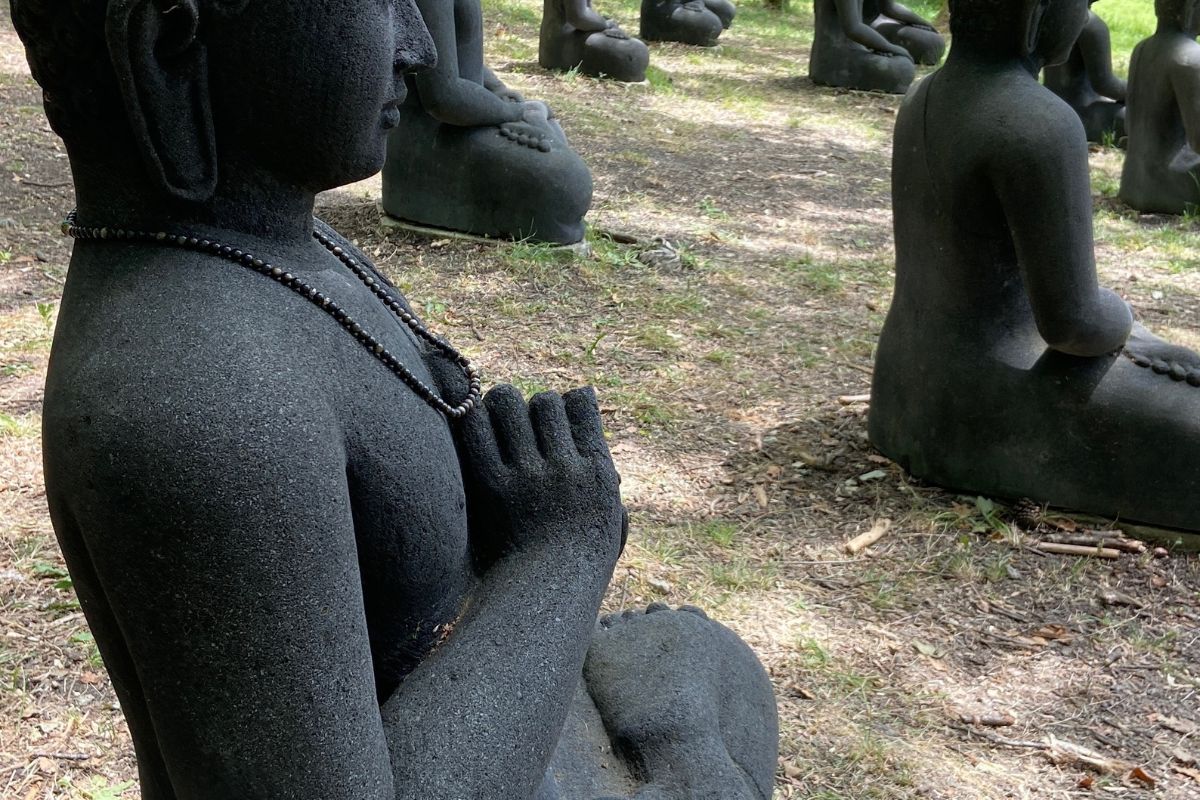

Sometimes we think that to live a productive life we must take action.
KEY POINTS
- One approach to burnout would be to lean into discomfort and try to make lemonade out of lemons.
- Sometimes the most workable solution is to stop working so hard at making something work.
- Doing nothing in some situations guarantees you won’t say or do something you might regret.
My son has a Zen calligraphy over his bed that says, “Doing Nothing Is Something.” He’s a middle schooler who sleeps a lot, fantasizes about baseball, and chats for hours about “nothing” with friends. As his mother, I have to sit on my hands not to tell him to clean his room, get going on his homework, and just, Do something! But, as a psychologist, I know that all of this nothing is doing something good for his brain and his mental health.
Sometimes we think that to live a productive life, we must take action. We place a high value on performance gains at work, crossing off tasks on our household to-do list, and getting in our HITT training. We negate the benefit of making pancakes with our kids on Sunday mornings or stopping to listen to birds.
We also place a high value on doing something to fix difficult situations. Psychology has long blamed individuals for their problems, and many traditional approaches to mental health lean on people to take action and assert themselves, change their thinking, or take “control” of their lives. But, sometimes, doing nothing is doing something, especially if doing nothing supports your values, your nervous system, and your peace of mind.
Burnout Example
Here’s an example. You are experiencing burnout. You look at the list of the six causes of burnout outlined by researcher Christina Maslach and meet most of them:
- Work demands: There are too many demands on you for the resources you have.
- Control: You don’t feel choice or autonomy at work.
- Rewards: You aren’t being appreciated or rewarded for your efforts.
- Community: You feel separate and don’t feel like you belong.
- Fairness: You see your leaders are biased and inequitable.
- Values: You highly value something that your organization does not.
One approach to your burnout would be to lean into discomfort and try to make lemonade out of lemons with action. You may “speak up” and ask for less work, try to build friendships with colleagues, or look for meaning in your work, no matter how small. I can imagine the many times I have coached a client to do these things. And, sometimes, they are a great course of action.
But sometimes the most psychologically flexible thing to do is to do what many people would consider “nothing.” If you are burned out, tending to your physical needs for sleep, time off, time in nature, or time away from work demands can be the best medicine. Once restored, you may have more resources to take action (which can include quitting!).
Doing nothing in some situations also guarantees you won’t say or do something you might regret. For example, when you have conflict with a friend or family member, sometimes the best solution is to use the dialectical behavior therapy skills of “opposite to emotion action” and “gently avoid.” If talking it out more is only getting you more stuck in your side, try doing nothing instead. Take your anger for a slow walk outside, carefully chop some vegetables in the kitchen, or productively procrastinate. When you come back, you may have a fresh perspective on your argument, or even remember that you love this person. Doing nothing is something.
Like my son’s sign, sometimes the most workable solution is to stop working so hard at making something work. Whether it’s your job, diet plan, or fighting with your best friend, it’s OK to do nothing, if in doing so you are freed up to move in directions that matter to you.
Pushing through and trying to change the unchangeable is exhausting; what if the solution is to do nothing with psychological flexibility?
Psychological flexibility involves awareness, openness, and engagement. Notice what is happening when you are stuck in doing something that not working for you, and open to the discomfort of doing nothing. Step back, let go of forcing it, and return to “doing something about it” when you have more clarity about what’s the next best move that lines up with your deepest values.
Doing Nothing Practices
Here are some doing nothing practices to try:
- Let go of fixing: What feelings show up when you consider letting go of trying to change, fix, or control your situation? Practice opening and allowing those feelings to be in your body. The bigger the feeling, the bigger the space you make for it.
- Try a friendly perspective: How many times have you told a good friend to pull themselves up by their bootstraps and push through a difficult situation? Probably rarely! More likely you tell them things like, “It’s OK to let go of something that’s not working for you,” or “I am here for you; you are not alone.” Tell yourself those things.
- Take committed inaction: Remember that inaction is action, too. Doing nothing is something! Where do you need to do less, subtract, or give up to free yourself from being stuck? Sometimes turning up the dial of caring for yourself involves turning down the dial of work obligations, perfectionism, or prioritizing other people’s opinions. How can you take committed inaction toward stopping?
Acceptance and Letting Go
Here are some more ways to learn about acceptance and letting go:
Something to write about:
What areas of your life are you spinning your wheels in doing, fixing, or controlling?
What would “doing nothing” look like for you in this area?
Something to listen to:
Values, Vulnerability, and Forgiveness with ACT Co-Founder Dr. Kelly Wilson on Your Life in Process Podcast
Something to read:
How to use creative hopelessness to get unstuck
Something to watch:


+ show comments
- Hide Comments
add a comment